
John 17:5 “And now, O Father, glorify Me together with Yourself, with the glory which I had with You before the world was.”
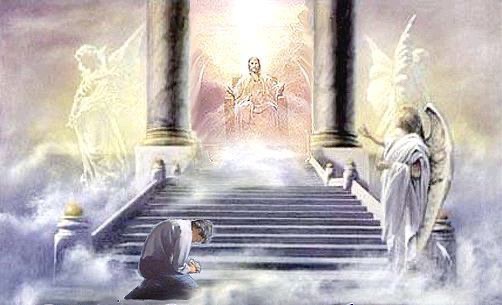
The concept of the Trinity is not one to be approached lightly. It’s a concept that requires careful consideration and thoughtful approach. Whenever an attempt is made to describe God great care must be taken, otherwise it could lead to a false representation of God that leaves others confused or led astray.
There are many religions that deny the thought of God as One in three persons. The critics accuse people of practicing polytheism, or attribute the thought to some three headed monster that leaves them confused and distrusting. The very term “Trinity”, is not found in the Bible, in fact it was used first by a man named Tertullian, a Latin theologian who wrote in the early third century. He was the first to use “Trinity” or “person” and “substance” to explain that the Father, Son and Holy Spirit are “one in essence – not one in Person.”
*Norton Herbst, P.H.D., explains it in the ‘Explore God’ article:
The Bible unequivocally asserts that there is only one God, upholding the monotheism of the ancient Israelites. They believed in only one God; all other idols, claims to deity, and so-called gods were deemed to be false.
Paul alluded to the Trinity by concluding his letter to the Corinthian church by referencing all three persons of God.
2 Corinthians 13:14 “The grace of the Lord Jesus Christ, and the love of God, and the communion of the Holy Spirit be with you all. Amen.”

The early followers of Jesus—who eventually became known as Christians—professed their faith in one God as well. Later Christians even used philosophical categories from Greek thought to explain that God had only one nature, one substance, and one essence that is never divided.
In other words, God is not schizophrenic. He does not change forms nor is He the head of a pantheon of gods. As Christians around the world continue to assert today: there is only one God.
GOD AS THREE-IN-ONE
There is evidence among the first followers of Christ that they understood the dynamics of who God is.
Even though early christians remained believers in one God, they worshipped Jesus as God. They often prayed to Jesus and even changed the day of their Sabbath to correlate with Jesus’ resurrection. They encouraged one another in the work of the Spirit and started their prayers by acknowledging the Father.
Jesus demonstrated in His life that there was more than one aspect of God as his Father. He prayed to the Father, and talked and acted as if God was distinct from him. Jesus also spoke of another “Helper”: the Holy Spirit (a term sometimes found in the Old Testament to describe God). When Jesus left the earth, he said this Spirit would come and reside in the hearts of his followers, bearing God’s very real presence and leading them in truth and life. (John 16:5-6)
To cap it all off, Jesus gave his followers a mission just before he left. He challenged them to help others become believers as well. As a symbol of a changed life, he directed them to baptize the new followers in water “in the name of the Father and of the Son and of the Holy Spirit.” This threefold practice became the key to the Christian understanding of who God is—one God, existing in three different persons.
The idea of God as three-in-one is indeed a mysterious concept, one that is difficult to understand. Analogies often fall short.
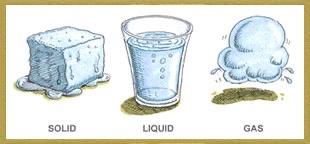
Some think of God as water, which is sometimes a solid (ice), sometimes a liquid, and sometimes a gas (steam). Others compare God to an egg, which is part shell, part white, part yolk.
The theologian Augustine offered a psychological analogy. He reflected on how the human mind has three faculties—memory, understanding, and will—but remains unified.
All of these analogies attempt to explain how one entity can constantly be three persons. But God—as Christians understand him—does not decide to be like a Father one day, like Jesus another day, and like a Spirit the next. He does not simply change roles or forms.
Rather, God is always one substance that is shared by three independent “persons” who each have a unique will and personality—and each is equally God. In fact, the Bible says that the Father is fully God, Jesus is fully God, and the Holy Spirit is fully God.
LOVE IS AT THE CENTER

*Perhaps the best explanation comes from a simple verse in the Bible: 1 John 4:16 “God is love.”The term “love” is often associated with affections and emotions. But practically speaking, love requires a subject, an object, and an action—a person to do the loving, an object to receive the love, and the act of loving. For example, think about giving yourself and your love to someone else.
Genuine love cannot be expressed by yourself; it requires others to give yourself away to. Thus, God did not simply begin to experience “love” only after he created people (objects whom he could love).
God is love, it is a constant state of being that has always been.
“The very essence of God’s reality is the intra trinitarian love of the Father, Son, and Holy Spirit.”11 His eternal existence is rooted in a shared love experienced within himself.
Jonathan Edwards
Furthermore, Edwards maintained that we are the beneficiaries: “The only possible reason for such a being to create the universe was to extend His love to other imperfect beings. . . . All created reality is like a quintessential explosion of light from the sun of God’s intra trinitarian love.”

God manifests Himself to us when we draw near to Him.
John 14:21 “He who has My commandments and keeps them, it is he who loves Me. And he who loves Me will be loved by My Father, and I will love him and manifest Myself to him.”
The Unsearchable God
From a position apart from God, the Trinity can be impossible to understand, but if you place your trust in God, His Spirit makes known the deeper things of God to His people. The revelation of God to His people concerns a deeper knowledge of who He is, and is given at salvation.
*The Father Loved us by sending us His Son, Jesus is the expression of that love, and the Holy Spirit is how we get to partake of that love.
Whatever your understanding of God is, it pales in comparison to what that understanding will be when we meet Him face to face. It will be a moment like no other. To understand the magnitude of His power, His love, and His depth of character is reserved only for His own.
Believers experience such a small percentage of this knowledge at present, and still rejoice and praise God for His glory revealed. Imagine being given the full opportunity without hindrance to partake of Him? This thought is beyond my imagination.
To be known by God is to know Him.
Knowing God is to enter into relationship with Him. It is personal and it is profound.

Psalm 147:5 “Great is our Lord, and mighty in power; His understanding is infinite.”
Scientists have speculated for years how much of the Universe we really know and observe and the numbers are staggering. It is estimated at best that we can observe 4% of the universe and yet we know almost the equivalent of zero. Now the Universe was created by God and for God, it is finite and has its limits. God Himself on the other hand is infinite in power, authority, and wisdom.
1 Kings 8:27 “But will God indeed dwell on the earth? Behold, heaven and the heaven of heavens cannot contain You. How much less this temple which I have built!.”
As vast as the Universe is, it cannot contain the presence of God. Mankind has tried to contain God by placing Him in a form that man can understand. The pride of mankind continuously elevates man’s intellect into a place of universal prominence.
Psalm 145:3 “Great is the LORD, and greatly to be praised; and his greatness is unsearchable.”
Not only is God beyond our comprehension, we don’t have the capacity to understand the fullness of His power.
Ephesians 3:8 “To me, the very least of all saints, this grace was given, to preach to the Gentiles the unfathomable riches of Christ,”
The writers in God’s Word were not reflecting their ignorance when divulging knowledge of the Lord, they were showing their insight into what they did understand.

God is infinite, unsearchable, unfathomable, and the universe cannot contain Him.
If we can only understand at best 4% of the Universe, how can we even begin to think we understand God?
If we know so little of who God is, how can we presume why He acts or doesn’t act within our lives? Why does God allow us to see in part, while other times we strive to perceive Him at all?—this is a mystery. We so often want to box God into a simple form of reason, purpose, or character or into something we can control and then make a claim as to why He does what He does. Why He allows evil in this world to seemingly go unchecked. Why He seems to let “bad things happen to good people”, why a child dies, a loving mother is murdered, a father has a heart attack way too young and the questions go on.
*Do you think that just maybe since we only understand a small percentage of the picture and the reasons allude us, we might have trouble fathoming the depth of God’s love and purpose?
The magnificence and power of Elohim deserves more than just a consideration. We must be slow in accusing God of injustice when we see only a small part of the picture.
It is important to have a knowledge of God’s character and trust that He never changes.
Proverbs 3:5-6 “Trust in the LORD with all your heart, and lean not on your own understanding; in all your ways acknowledge Him, and He will make your paths straight.”
It takes everything to trust God’s provision for life. Remembering He is always good, His love for never diminishes, His plans never change, and in the midst of the trials, we can rely on the knowledge that His will be done and nothing can remove us from His Love.
Now we know in part, one day we will see in full…..Until then Trust Him. He is God and He is Good!
Discover more from U.T.
Subscribe to get the latest posts sent to your email.


As I turn 75 next Tuesday, 8/23….I appreciate you concluding the devotion with Proverbs
3:5-6…my life scripture.
LikeLiked by 1 person
Amen brother
LikeLike