
Job 31:14 “What will I do when God confronts me? What will I answer when called to account?”

There is a response we must all consider when the day of reckoning arrives, the day when every person will stand before God and give an account of their lives. Actions are not without consequence and every word spoken, each thought and intent of the heart will be measured against God’s standard of Holiness.
Many have questioned whether someone like Job should be held accountable for sin, especially since he lived prior to Moses and the giving of the moral law. This argument extends to other people groups who have been isolated in jungles or islands, having never heard a missionaries account of the gospel. What about those who don’t even have a written language or can’t read a Bible since it doesn’t exist in their culture?
The book of Job is considered the oldest book in the Bible. When examining the language, descriptions, and other forms of writing in this book, it becomes more evident Job probably lived during the time of the patriarch’s.
A Biblical Timeline
According to Apologetic press, there is good evidence that the book of Job was written after the flood ~2350 B.C., and before the time of Moses ~1750 B.C.
A. Eliphaz refers to the flood as being in the past in Job 22:16
B. Job sacrifices to God as head of his family (a practice of patriarchal times that stopped with Moses) Job 1:5
C. Job’s daughters received an inheritance along with his sons Job 42:15 a patriarchal practice that also stopped with Moses
D. Job’s wealth is determined by flocks rather than money that is also consistent with patriarchal times Job 1:3, 42:12
E. The kesitah or piece of money mentioned belongs to patriarchal times
F. The musical instruments (organ, harp, and timbrel) are the instruments of early Genesis
G. Job lived long enough to birth two families of ten children and raise them to adulthood then lived another 140 years. He lived at least 200 years and possibly longer. This is consistent with the ages of patriarchs prior to Abraham.
Why is this so significant? Consider what Job references in chapter 31 which for the sake of argument were written around 2000 B.C. and then look at the corresponding words of Job, Moses(1750 B.C.) and Jesus (31 A.D..)
Job 31:1 “I have made a covenant with my eyes; Why then should I look upon a young woman?”
Exodus 20:14 “You shall not commit adultery.”
Matthew 5:27,28 “You have heard that it was said to those of old, ‘You shall not commit adultery.’ But I say to you that whoever looks at a woman to lust for her has already committed adultery with her in his heart.”
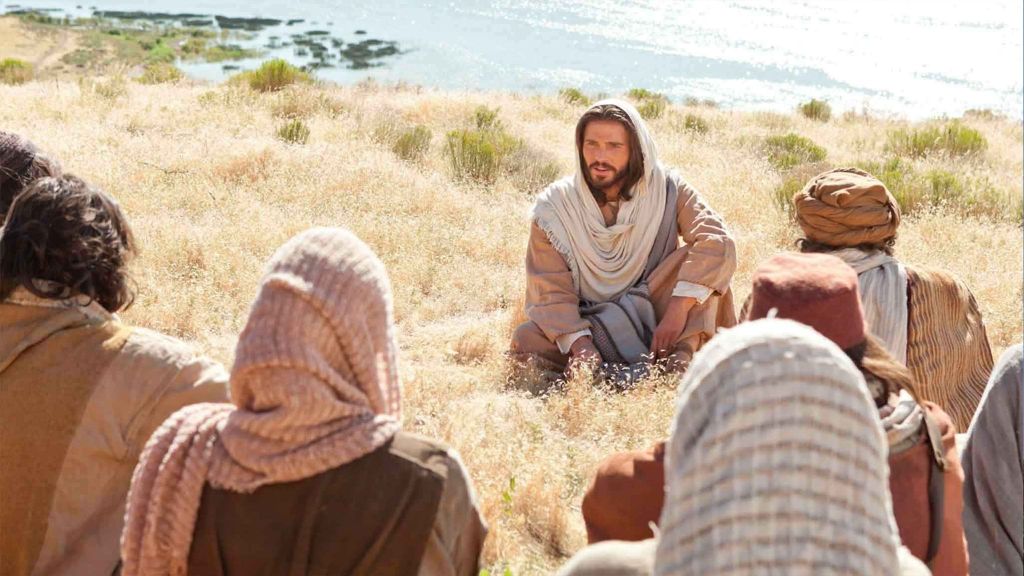
The 7th commandment of the Moral Law was to not commit adultery, it was expounded upon by Jesus in His Sermon on the Mount but was recognized by Job two thousand years earlier before the law was given to Moses.
The moral law (10 commandments), is the defining measure by which all people will be held accountable for sin. (1 John 3:4) Since Job recognized what offended God, we can assume the standard of righteousness by which mankind has been held can also be known apart from the law.
Job understood the necessity to be truthful. Moses was given the 9th command as part of the covenant, while Jesus illustrated where lying originates.
Job 31:5,6 “If I have walked with falsehood,
Or if my foot has hastened to deceit,
Let me be weighed on honest scales,
That God may know my integrity.”
Exodus 20:16 “You shall not bear false witness against your neighbor.”
John 8:44 “You are of your father the devil, and the desires of your father you want to do. He was a murderer from the beginning, and does not stand in the truth, because there is no truth in him. When he speaks a lie, he speaks from his own resources, for he is a liar and the father of it.”–Jesus
Examine the 31st chapter of Job and you will see the moral law being expressed throughout. From the breaking of the first commandment to not having other gods before the One true God(1st and 2nd command), to blasphemy (3rd), hatred of others (6th), adultery (7th), theft (8th), covetousness (10th), the list goes on and reveals Job clearly recognized and understood the Moral law of God and knew it was his responsibility to observe it.
If Job knew he would be held accountable for how he kept these moral principles, what excuse do we have?

What excuse does anyone have who chooses to rebuke their Creator and go their own way?
Paul made this reality evident to the Romans…
Romans 2:12-16 “For as many as have sinned without law will also perish without law, and as many as have sinned in the law will be judged by the law (for not the hearers of the law are just in the sight of God, but the doers of the law will be justified; for when Gentiles, who do not have the law, by nature do the things in the law, these, although not having the law, are a law to themselves, who show the work of the law written in their hearts, their conscience also bearing witness, and between themselves their thoughts accusing or else excusing them) in the day when God will judge the secrets of men by Jesus Christ, according to my gospel.”
Not one single person in history will have an excuse for sin.
Believers must guard their hearts daily. They have an advocate with the Father, it is Jesus His Son. It is by His strength they move, breathe, and have life.
Grace was retroactively issued to the patriarch’s upon Jesus’ sacrifice upon the cross and it is passed down now to all who believe.
Job’s question is one we would be wise to consider ourselves….“What will I do when God confronts me? What will I answer when called to account?”
What excuse will we have for not being found faithful? Did I show love or was it all about me? Did I give of the resources God gave to me, or did I hoard my wealth only to leave it behind for another?

When questions such as these are asked during our time living the only life we are given, we can make corrections to our course and still be found faithful. When the body dies, the opportunity is over. When breath is no longer in our lungs, when the heart stops beating and all electrical activity ceases in the brain, we must give account for our lives.
John 5:28-29 “Do not marvel at this; for the hour is coming in which all who are in the graves will hear His voice and come forth—those who have done good, to the resurrection of life, and those who have done evil, to the resurrection of condemnation.”
Goodness found in the life of a believer is evidence of God’s hand moving. If we are doing good, then we are being found obedient. The Spirit of God leads His people in righteousness and truth, our job is to follow.
Justification is found by Faith in Christ alone. We cannot and will not stand on our own merit, no one will. Praise God, Jesus paid the price that we don’t have to pay and made a way.
When we are brought before the judgement seat of Christ, our hearts would condemn us if it were not for the perfect sacrifice made on our behalf…Jesus has made a way.

 U.T.
U.T. 
Amen. This is great message brother. May God continue using you for His glory 🙏.
LikeLike