
Revelation 20:6 “Blessed and holy is the one who shares in the first resurrection! Over such the second death has no power, but they will be priests of God and of Christ, and they will reign with him for a thousand years.”

At the end of the church age there is a pattern described in the Bible regarding a final period of time, a thousand year reign of Christ upon the earth. Known as the Millennial reign of Christ, the many scriptures that speak of this future time is hard to refute. As with every eschatological belief, there are always people who disagree.
As with every common thought, it’s worth examining the validity of a belief for oneself and drawing reasonable conclusions. If scripture supports a position, then it should be noted and observed, but if scripture doesn’t support a belief, then it should be disregarded, since all Truth is founded in God’s Word.
Some interpret the 1,000 years as a figurative way of saying “a long period of time,” rather than a literal, physical reign of Jesus Christ on earth. However, others believe the Bible tells us that Christ will literally return to earth and establish himself as king in Jerusalem, sitting on the throne of David. The book of Revelation is quite descriptive of this event and any other interpretation other than a literal 1000 years leaves holes throughout scripture. It is the only solution to adequately interpret all of God’s promises. To make some promises figurative and other’s literal leaves the entire Word of God in doubt.
Revelation 20:4-5 “And I saw thrones, and they sat on them, and judgment was committed to them. Then I saw the souls of those who had been beheaded for their witness to Jesus and for the word of God, who had not worshiped the beast or his image, and had not received his mark on their foreheads or on their hands. And they lived and reigned with Christ for a thousand years. But the rest of the dead did not live again until the thousand years were finished. This is the first resurrection.”

But there are 3 schools of thought regarding this period of time. Amillennialism, Postmillennialism, and Premillennialism. Amillennialists do not expect a future literal 1,000, but rather view it as Christ’s reign with his saints during the time between his two comings. Postmillennialists believe Christ returns after the millennium as a golden age when the majority of the world has converted to Christianity. Premillennialists believe Christ returns before the millennium preceded by a period of intense tribulation. Because Amillennialism and Premillennialism are the two predominant thoughts, I’ll keep the focus limited to these beliefs.
Amillennialism
According to the gospel coalition, Amillennialists interpret the millennium … as describing the present reign of the souls of deceased believers with Christ in heaven. They understand the binding of Satan … as being in effect during the entire period between the first and second comings of Christ, though ending shortly before Christ’s return. They teach that Christ will return after this heavenly reign.
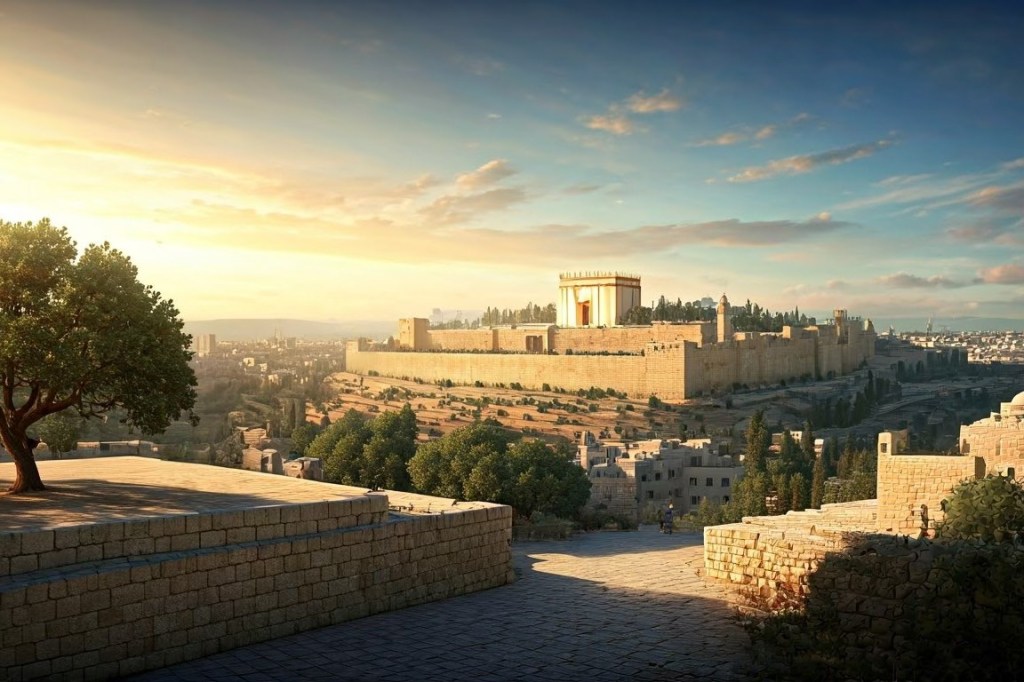
Amillennialists believe we are presently living in the millennial kingdom, which is characterized by the simultaneous experiences of gospel victory and suffering for the gospel. This obviously indicates amillennialists interpret “one thousand” figuratively.
Premillennialism
George Ladd defines Premillennialism as, “the doctrine stating that after the Second Coming of Christ, [Christ] will reign for a thousand years over the earth before the final consummation of God’s redemptive purpose in the new heavens and the new earth of the Age to Come.” According to historic Premillennialists, the present age will continue until a brief period of tribulation, after which “Christ will return to earth to establish a millennial kingdom.” At the second coming there will be a resurrection of believers and a public rapture.
A practical look
I’ve always had questions as to why God would continue the pattern of mankind’s sin and Satan’s rebellion, even after a great battle disposed of satan and all God’s enemies. To be truthful, it never made sense as to why the Lord would establish a throne in Jerusalem for an entire millennium while the nations slowly rebel again to a point of one last major battle.
If we examine elements of this millennial period of time, we can draw a perspective as to what God reveals in scripture.
- Isaiah 2:4; 42:1: Jesus will reign as king over Israel and the world
- Isaiah 11:6–9; 32:18: The world will live in peace
- Revelation 20:1–3: Satan will be bound
- Jeremiah 31:33: The millennial kingdom will be a time of obedience
- Isaiah 35:8: The millennial kingdom will be a time of holiness
- Isaiah 65:16: The millennial kingdom will be a time of truth
- Isaiah 11:9; Habakkuk 2:14: The millennial kingdom will be a time of the knowledge of God
- Psalms 45, 68, 89: Speak of the coming Millennial Kingdom
- Joel 3:17-21: Speak of the coming Millennial Kingdom
- Psalms 72:1-8, 79:13, 113:4-9, and 145: Also speak of the coming Millennial Kingdom
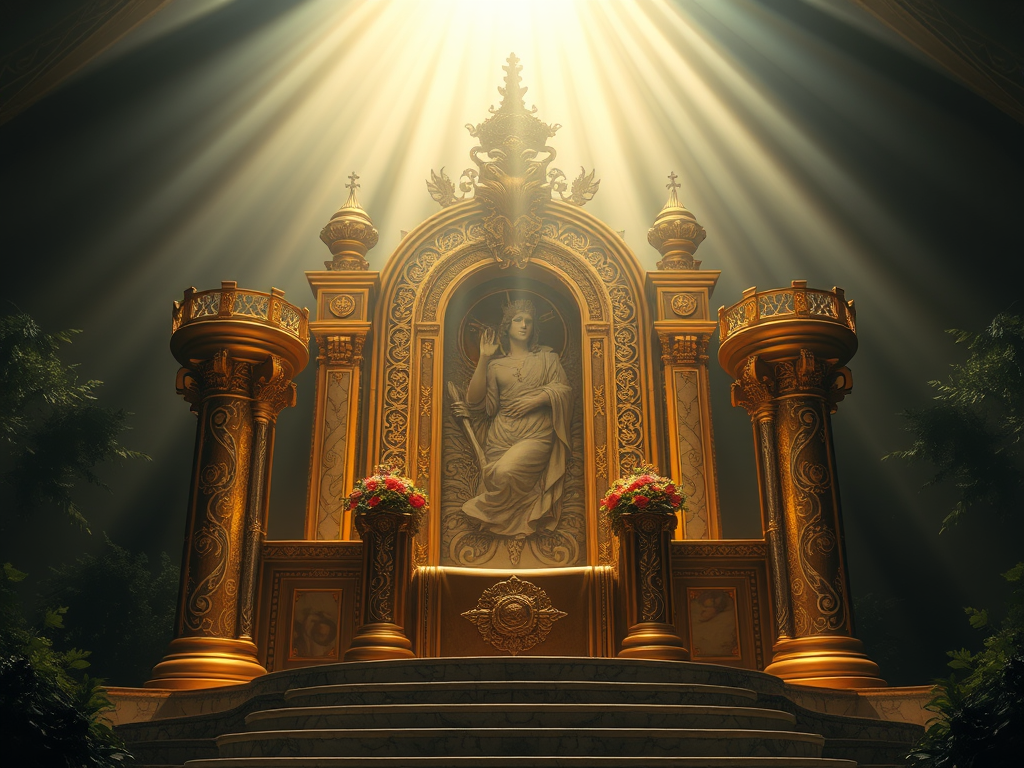
Matthew 19:28 Jesus said to them, “Truly, I say to you, in the new world, when the Son of Man will sit on his glorious throne, you who have followed me will also sit on twelve thrones, judging the twelve tribes of Israel.
The Messiah will use this time to judge the people of Israel along with His disciples. Israel’s rejection of the Messiah will have led them into the shock of watching the rapture of the church occur without them. A large contingent of jews will believe and the 144,000 will become evangelists throughout the world. At the end of the tribulation after Satan is thrown into the bottomless pit, the Lord will judge the nations. An earthly millennial kingdom is the only explanation of the end-times that corresponds to Jesus’ teaching in the Gospels. For example, His promise to the apostles that one day they would “sit upon twelve thrones, judging the twelve tribes of Israel” (Matt. 19:28) would be meaningless apart from a literal, historical restoration of Israel in the Millennium.
Daniel 7:27 “And the kingdom and the dominion and the greatness of the kingdoms under the whole heaven shall be given to the people of the saints of the Most High; his kingdom shall be an everlasting kingdom, and all dominions shall serve and obey him.’
The millennial reign of Christ will be a time that Jesus establishes His Lordship over the earth, while God’s people will reign over it with Him. The meek will inherit the earth and the Lord will be exalted over a fallen world. An earthly millennial kingdom is the only consistent interpretation of Messianic prophecy. It is obvious from the Gospels that a great many of those prophecies were literally fulfilled during Jesus’ lifetime.
Zechariah 14:16 “Then everyone who survives of all the nations that have come against Jerusalem shall go up year after year to worship the King, the Lord of hosts, and to keep the Feast of Booths.”
The earth will finally experience what God originally intended, righteousness will reign, peace will be over all Creation, and the Lord will be honored by all. To reject the idea of a literal Millennium is to maintain that some of the OT prophecies were literal and some were not. And to take that position is to assume arbitrarily that all prophecies not literally fulfilled by NT times are to be spiritualized. At the time they were written, all OT predictions obviously pertained to the future. By what logic or authority, then, does one take some of their fulfillments to be literal and others to be only figurative?
Luke 1:32-33 “He will be great and will be called the Son of the Most High. And the Lord God will give to him the throne of his father David, and he will reign over the house of Jacob forever, and of his kingdom there will be no end.”
The throne that Jesus establishes will never be forfeited. Once Jesus takes His place, there will never be another ruler. An earthly, visible kingdom is the best possible way for Jesus Christ to demonstrate that He is the supreme ruler over His creation. How else could He prove Himself to be King of kings and Lord of lords?

Isaiah 11:6-9 “The wolf also shall dwell with the lamb,
The leopard shall lie down with the young goat,
The calf and the young lion and the fatling together;
And a little child shall lead them.
The cow and the bear shall graze;
Their young ones shall lie down together;
And the lion shall eat straw like the ox.
The nursing child shall play by the cobra’s hole,
And the weaned child shall put his hand in the viper’s den.
They shall not hurt nor destroy in all My holy mountain,
For the earth shall be full of the knowledge of the Lord
As the waters cover the sea.“
The animals will behave differently, and peace will encompass every element of God’s Kingdom. The nations will not practice war and much of the earth will be dedicated in service to Jesus’ authority and rule. An earthly millennial kingdom is the only and necessary bridge from human history to eternal glory. Paul declares that in the end Christ will deliver “up the kingdom to the God and Father, when He has abolished all rule and all authority and power” and that “He must reign until He has put all His enemies under His feet” (1 Cor. 15:24-25). What other kingdom could Christ deliver to His Father but an earthly kingdom?
Isaiah 2:2-4 “It shall come to pass in the latter days that the mountain of the house of the Lord shall be established as the highest of the mountains, and shall be lifted up above the hills; and all the nations shall flow to it, and many peoples shall come, and say: “Come, let us go up to the mountain of the Lord, to the house of the God of Jacob, that he may teach us his ways and that we may walk in his paths.” For out of Zion shall go forth the law, and the word of the Lord from Jerusalem. He shall judge between the nations, and shall decide disputes for many peoples; and they shall beat their swords into plowshares, and their spears into pruning hooks; nation shall not lift up sword against nation, neither shall they learn war anymore.”
The Bible mentions that Jesus’ reign will take place as a fulfillment of God’s covenant to Abraham (Genesis 12:1-3), to Israel as a nation (Deuteronomy 20:1-10), and to David (2 Samuel 7:10-13).
It is important to note…when studying Revelation and eschatology it is all too easy to lose sight of the call of Christ in Revelation, which is to live victoriously as overcomers of sin, the world, and the devil and to remain faithful to him at all costs because he will make all things right in the end. Whatever view one thinks best reflects the teaching of Scripture, it must always be kept in mind that Scripture always presents the doctrine of last things as a motivation for faithful living.
In the end, perhaps John Frame draws our attention to the most important eschatological point: “So far as I can see, every Bible passage about the return of Christ is written for a practical purpose –not to help us develop a theory of history, but to motivate our obedience.”

 U.T.
U.T. 